



Revision Surgery in the Dubai
Are you unhappy with the results of your last bariatric surgery? Perhaps you went abroad and didn’t receive any aftercare, or have simply experienced weight regain. Either way, the medical weight loss specialists at Allure can help. Discuss revisional surgery with our team in order to fully explore your options.
Don’t settle for unsatisfactory providers or service. Our team regularly perform gastric sleeves and gastric bypasses.
Due to previously having had bariatric surgery, your options may be limited, but in our experience it is worth looking into. Weight loss is a journey and we look forward to helping you on yours.
Types of Revision surgeries
Gastric Sleeve to Bypass Revisional Surgery
If you’ve had a previous sleeve gastrectomy, gastric sleeve, in the past, but have not been successful in your weight loss journey, we offer a revision procedure to revise the sleeve into a bypass.
Some people may regain weight and stretch a smaller, sleeved stomach over time. The best surgical option for these patients is to do a gastric sleeve revision and turn it into a gastric bypass. A gastric bypass doesn’t remove any of the stomach tissue, but instead our consultant surgeons create a new structure out of the existing stomach, commonly called a gastric pouch. This drastically limits the amount of food you can consume at any one time, limiting calorie intake and helping you to lose weight. Over a two-year period you can expect to lose up to 70% of your excess weight.

Gastric Band to Gastric Sleeve or Gastric Bypass
Gastric band patients who have not reached their desired weight loss goal or struggle with the maintenance of a gastric band may want a different option. We offer a revisional surgery to a gastric band or a gastric sleeve.
A gastric band or gastric sleeve surgery involves removing the gastric band and surgically altering the digestive system permanently. In order to determine whether it will be a gastric bypass or a gastric sleeve surgery, you will have an in-depth discussion with our consultant surgeon who will help determine which is most suitable.
A gastric sleeve revision procedure would involve removing the band completely and removing 80% of your stomach and suturing to create a smaller, banana shaped structure. This procedure is also known as a sleeve gastrectomy.
A gastric bypass revision surgery would involve removing the band and creating a new structure out of the existing stomach without removing any tissue. The new structure, often called a pouch, limits the amount of food you can eat at any one time.
Both procedures will significantly change the way you eat by limiting the amount of food that you can physically consume. By reducing the size of your stomach, it also suppresses the production of ghrelin (commonly referred to as the hunger hormone). The reduction of size and production of ghrelin can result in significant weight loss.
Learn more about the gastric sleeve with Allure
Our Specalist
Dr Balaji Nagammapudur
MBBS, MS, FRCS(G), FRCS(E), FRCS(IC-UGI), CCT(UK)
Dr. Balaji is a British Board–certified General, Laparoscopic, Upper GI and Bariatric Surgeon with over 30 years of experience. He trained in the UK and USA, completing clinical research at the University of Southern California before becoming a consultant in Bariatric and Upper GI surgery in 2006. He has since led one of the UK’s top high-volume bariatric centres, held national leadership roles, and contributed extensively to academic research and international publications
Clinics
Revision Surgery Clinics
Our independently registered facilities were dutifully selected for their ability to meet our high standards and the needs of our revision surgery patients.
Dubai
Where your Procedure happens
Procedure Hospitals
Independently partnered hospitals have been carefully selected for their exceptional standards and advanced surgical environments, where our bariatric procedures are performed, while all pre- and post-operative care is managed by Allure Weightloss.
Healthpoint Hospital
Abu Dhabi Abu Dhabi United Arab Emirates
Calculate Your BMI
In order to have bariatric surgery you need a BMI of at least 35. You can use our Calculator in order to determine your BMI, or use the NHS BMI Calculator.
How is body mass index (BMI) measured?
An individuals BMI is calculated by using the following formula:
BMI = Weight (kg) / Height (m)²
You must take your weight in kilograms, divide it by your height in meters, and then divide it a second time by your height in order to determine the correct body mass index.
Ask About Revision Surgery
Begin your weight loss journey with expert guidance from our UK-trained team. Book your consultation today and discover safe, effective, and lasting results with Allure Weightloss
Thank you for your submission!
We will get back to you shortly.
Revision Surgery FAQs
Most patients can expect to lose up to 50–70% of their excess weight in the two years after their revision surgery, but results may vary depending on individual circumstances.
Yes, you may experience dumping syndrome after revision surgery, especially if you consume high-sugar or high-fat foods. Symptoms include nausea, weakness, dizziness, sweating, and diarrhea. Avoid eating and drinking at the same time to help prevent these symptoms.
After revision surgery, you’ll start with a liquid diet and gradually transition to soft foods. A dietitian will guide you on what to eat during your recovery period.
Excess skin removal can be performed after revision surgery, but it’s typically considered a cosmetic procedure, and it may not be covered by insurance.
Eligibility typically requires you to have undergone a previous bariatric procedure, be experiencing weight regain or complications, and be medically fit for another surgery. You should also be committed to long-term follow-up and lifestyle changes.
Revision surgery generally carries more risks than the original procedure, as it involves operating on a previously altered stomach. Your consultant will explain potential complications and risks before proceeding.
Yes, weight regain can occur after revision surgery if lifestyle changes are not followed. It’s important to adopt a healthy diet and exercise routine to maintain your weight loss.
You may need two to four weeks to recover depending on the type of revision surgery and how physically demanding your job is.
Revision surgery is generally non-reversible. Long-term success depends on following recommended lifestyle changes, including a balanced diet and exercise.
It’s advised to avoid alcohol for at least six months after revision surgery as you may feel its effects more quickly due to changes in how your body absorbs alcohol.
Caffeine is generally safe in moderation after revision surgery, but excessive consumption can lead to dehydration. Your dietitian will advise you on the right amount.
It’s crucial to avoid non-steroidal anti-inflammatory drugs (NSAIDs) like aspirin, ibuprofen, and naproxen, as they can irritate your stomach and lead to ulcers.
Staying hydrated is crucial. Your dietitian will recommend specific types of liquids to drink. Avoid sugary and fizzy drinks to prevent discomfort and complications.
Without enough protein, your body will start using muscle mass for energy, which can lead to muscle weakness, fatigue, and slower recovery.
Yes, after revision surgery, your body may have difficulty absorbing iron, leading to low iron levels. Iron supplements may be necessary, and your doctor will monitor your levels during recovery.
Case Studies
Take a look at some of our incredible weightloss success stories


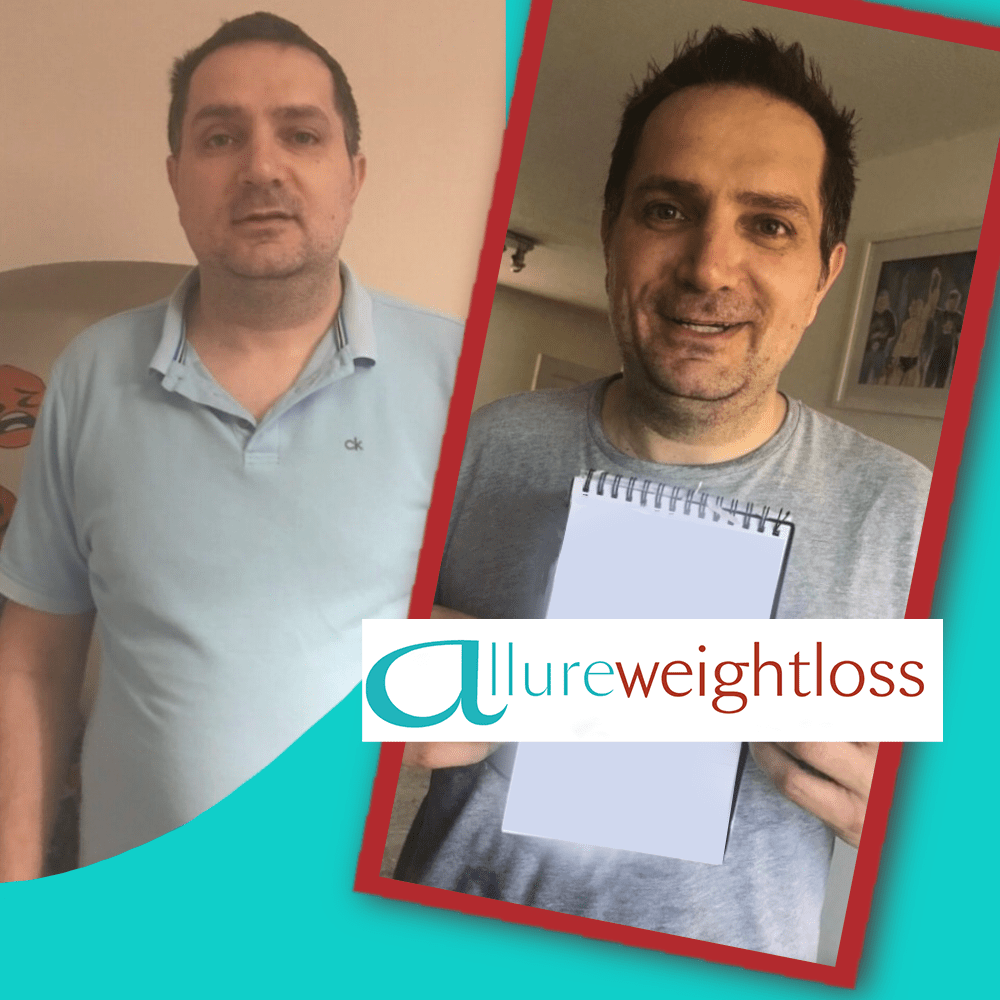
Moataz lost 50kg!

Federica’s Gastric Balloon Journey