Updated 22 October 2026 | Allure Weightloss Dubai
Which weight loss treatment is right for you — medication, a gastric balloon or bariatric surgery?
With the growing range of medical weight loss treatments available in Dubai, deciding where to begin can feel more complicated than ever.
Prescription medications such as Mounjaro and Wegovy have transformed obesity treatment. New oral weight-loss medicines provide alternatives to weekly injections. Gastric balloons remain an established, temporary intervention, while gastric sleeve and bypass surgery offer significant long-term benefits for appropriately selected patients.
But these treatments work differently, have different eligibility criteria and involve very different commitments.
The best weight loss treatment isn’t necessarily the newest medication, the longest-lasting balloon or the most powerful surgical procedure. It’s the option that best suits your health, weight-loss goals and personal circumstances.
At Allure Weightloss, we specialise in medical weight management for people living in Dubai and across the UAE. Our treatment pathways include prescription medication, gastric balloons, bariatric surgery, nutrition and ongoing support.
This guide compares the main options, what clinical research tells us about their effectiveness, the advantages and limitations of each approach, and the factors to consider before making a decision.
What Medical Weight Loss Treatments Are Available in Dubai?
There are three principal treatment pathways to consider.
1. Prescription Weight Loss Medication
Modern obesity medications influence biological pathways involved in appetite, fullness and food intake.
Treatments include weekly injections such as Mounjaro and Wegovy, alongside newer oral medicines.
Medication does not require surgery, but treatment requires clinical assessment, prescribing and appropriate monitoring. Ongoing treatment may be necessary to help maintain weight loss.
2. Gastric Balloon Treatment
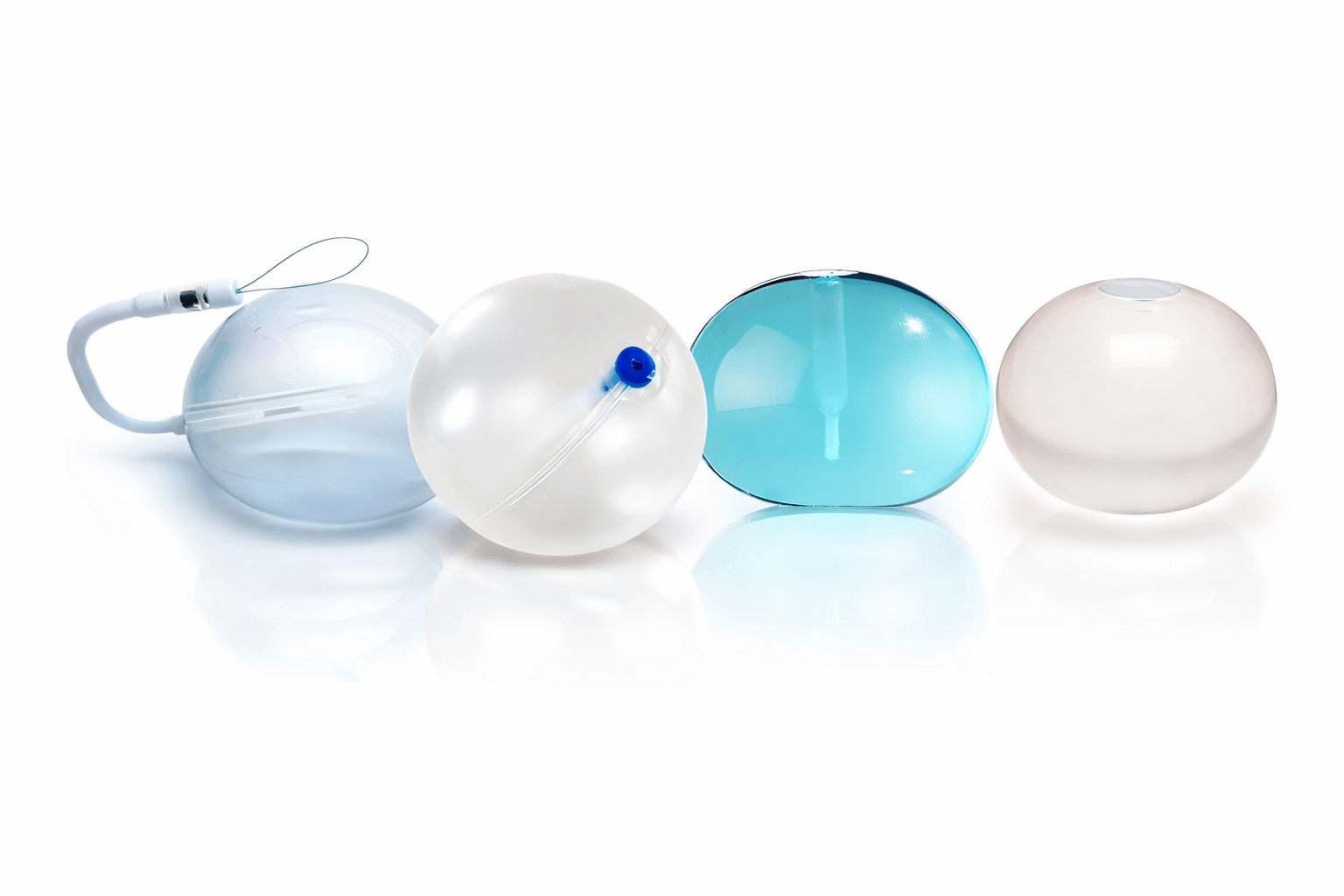
A gastric balloon is a temporary device placed inside the stomach to help patients feel satisfied with smaller portions.
Options in Dubai include swallowable gastric balloons and devices placed endoscopically for six or twelve months.
Balloon treatment does not permanently change the stomach’s anatomy, although endoscopic placement or removal may involve sedation or anaesthesia.
3. Bariatric Surgery
Bariatric surgery changes the digestive system to support substantial weight reduction and, in some cases, improvement in obesity-related metabolic conditions.
The most established procedures include gastric sleeve and gastric bypass.
Surgery requires careful selection, an operation and recovery, along with long-term nutritional monitoring and lifestyle changes.
Each pathway has an important place in modern obesity management.
Weight Loss Medication
Mounjaro, Wegovy and oral GLP-1 options.
Prescription treatment supporting appetite regulation and weight management without surgery.
Important considerations: Ongoing dosing, medical supervision, tolerability and long-term planning.
Gastric Balloon
Allurion Smart Capsule, six-month and twelve-month endoscopic balloons.
A temporary device placed inside the stomach to support fullness and portion control.
Important considerations: Adjustment symptoms, individual suitability, follow-up and removal arrangements where applicable.
Bariatric Surgery
Gastric sleeve, gastric bypass, mini bypass and selected revision procedures.
Specialist surgical treatment creating lasting anatomical changes to support weight management.
Important considerations: Surgical assessment, recovery, nutritional monitoring and long-term follow-up.
Not Sure Which Weight Loss Treatment to Explore First?
If you’re comparing Mounjaro or Wegovy, a gastric balloon or bariatric surgery in Dubai, our Allure 360° Weight-Loss Treatment Finder can help you explore your options.
In a few simple steps, you can review the three treatment pathways, understand relevant clinical research in the context of your starting weight and identify useful questions to discuss with a healthcare professional.
There is no need to provide contact details to view your results. The Finder provides educational guidance rather than a medical diagnosis, eligibility decision or personalised treatment recommendation.
Explore the Allure Weight-Loss Treatment Finder →
Weight Loss Medication in Dubai: Mounjaro, Wegovy and Oral Treatments
Prescription weight-loss medication has become an increasingly important option for people seeking medically supported weight reduction in Dubai.
Modern medicines act on hormone pathways involved in appetite regulation and food intake, helping eligible patients manage hunger and feel fuller.
Mounjaro — Tirzepatide
Mounjaro is a once-weekly prescription injection containing tirzepatide.
It activates both GIP and GLP-1 receptors, which influence appetite and metabolic regulation.
Mounjaro has demonstrated substantial weight-loss potential in clinical studies.
In the SURMOUNT-1 trial, participants receiving tirzepatide 15 mg achieved an estimated 22.5% average body-weight reduction over 72 weeks under the trial’s efficacy analysis.
The corresponding treatment-regimen analysis, which accounted for treatment discontinuation, reported 20.9%.
These findings demonstrate the potential of tirzepatide over an extended treatment period. They do not mean that every patient will lose 22.5%, nor that everyone needs or tolerates the highest dose.
Read more about Allure’s Mounjaro weight loss programme in Dubai.
Wegovy — Semaglutide
Wegovy contains semaglutide, a GLP-1 receptor agonist used for long-term weight management in eligible patients.
It is available in an established once-weekly injectable formulation.
In the STEP 1 clinical trial, injectable semaglutide 2.4 mg produced approximately 14.9% average body-weight reduction over 68 weeks under the trial’s treatment-policy analysis.
Again, this is a clinical trial average rather than an individual prediction.
Allure offers a Wegovy injection programme in Dubai, with clinical assessment and different levels of ongoing support.
Oral Weight Loss Medications
During 2026, oral GLP-1 options have expanded in the UAE.
Wegovy Pill (oral semaglutide) and Foundayo (orforglipron) are two distinct prescription medications developed for weight management.
Their administration requirements and clinical characteristics differ.
For example, Wegovy Pill has specific fasting and water requirements, while Foundayo has different administration instructions.
Allure provides a dedicated Wegovy Pill programme for eligible patients.
The availability of other medicines through Allure must be confirmed before any particular treatment is offered.
Our comprehensive Weight Loss Medications in UAE — 2026 Guide explains the medicines and their differences in greater detail.
Advantages of Prescription Weight Loss Medication
For suitable patients, medication can offer several benefits:
- No surgical procedure or implanted gastric device.
- Clinically demonstrated weight reduction.
- Treatment that can be adjusted under medical supervision.
- Potential improvements in obesity-related health conditions.
- Different medication formats and support options.
Medication may be particularly attractive to people who prefer a non-procedural treatment pathway.
Limitations and Considerations
Prescription medicines are not suitable for everyone.
Common side effects of GLP-1-based treatments can include nausea, constipation, diarrhoea, vomiting and abdominal discomfort.
More serious complications are possible and require appropriate medical assessment.
Another important consideration is treatment duration.
Obesity is often a chronic condition, and patients who stop medication may experience a return of appetite and some weight regain.
Longer-term treatment, maintenance planning and ongoing costs therefore deserve consideration from the beginning.
Medication should be viewed as part of a structured medical weight-management programme, rather than simply an injection or tablet that produces automatic results.
Gastric Balloon Treatment in Dubai: A Temporary Alternative
For patients seeking an intervention without permanently changing the stomach’s anatomy, a gastric balloon may be an appropriate option.
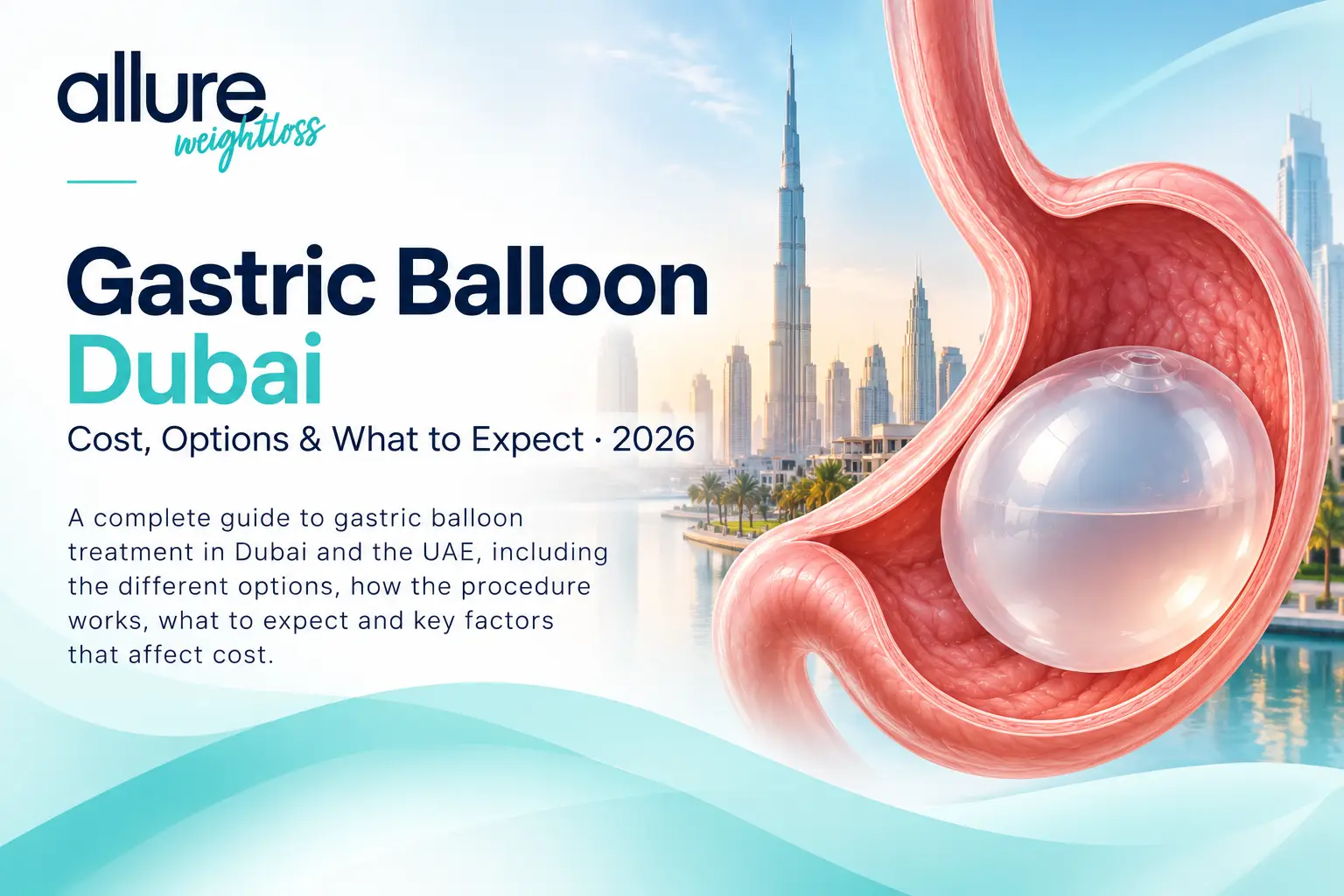
A gastric balloon is a soft medical device placed inside the stomach and filled with liquid.
By occupying space, it can help patients feel fuller with smaller meals and support portion control during a structured treatment programme.
Allurion Smart Capsule — Approximately Four Months
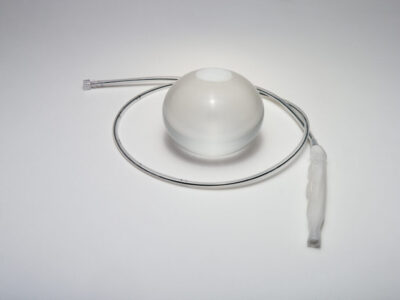
The Allurion Smart Capsule is a swallowable gastric balloon.
The patient swallows a small capsule containing the deflated balloon, attached to a thin catheter.
After the clinician confirms that it has reached the stomach, the balloon is filled during the appointment.
It is designed to remain in place for approximately sixteen weeks before emptying and passing naturally.
Routine placement does not require endoscopy or anaesthesia, although clinical monitoring remains essential and intervention can occasionally be necessary.
Six-Month Gastric Balloon — Medicone
Allure offers the Medicone Corporea six-month balloon.
This is placed endoscopically, typically with sedation or anaesthesia appropriate to the patient and procedure.
The balloon is designed to remain inside the stomach for up to six months before planned endoscopic removal.
Twelve-Month Gastric Balloons — Orbera365 and Medicone
For patients considering a longer treatment duration, Allure offers twelve-month options including Orbera365 and Medicone, subject to individual suitability and local availability.
These balloons require endoscopic placement and planned removal.
The longer duration offers additional time to develop dietary and lifestyle habits, but it does not automatically guarantee greater weight loss.
How Effective Are Gastric Balloons?
Published gastric balloon outcomes frequently fall around 10–15% total body-weight reduction, depending on the device, treatment duration, patient characteristics and support programme.
Outcomes should be assessed using evidence specific to the selected balloon system rather than assuming every balloon produces equivalent results.
One of the most important factors is what happens alongside the balloon.
Dietitian support, symptom management, changes in eating habits and a plan for maintaining results after removal all matter.
Advantages of a Gastric Balloon
- Temporary treatment without permanent surgical changes.
- Different treatment-duration options.
- Can support portion control and dietary changes.
- Does not require long-term use of a weight-loss medication.
- Supported by clinical and nutritional aftercare.
Limitations and Risks
The first few days can be uncomfortable while the stomach adjusts.
Nausea, vomiting, cramps and reflux can occur, and some patients require additional medical support.
A minority may experience intolerance or complications requiring early removal.
Endoscopic balloons also require a planned removal procedure.
Weight regain is possible after the balloon is removed or passes naturally, making ongoing lifestyle changes important.
A gastric balloon is not a permanent cure for obesity. It is a temporary tool that should be accompanied by a long-term weight-management plan.
Explore the available options through Allure’s Gastric Balloon Dubai programmes.
Bariatric Surgery in Dubai: Gastric Sleeve and Gastric Bypass
Bariatric surgery is an established treatment for clinically significant obesity and can provide substantial, durable weight reduction.
Unlike medication or a temporary gastric balloon, surgery creates lasting anatomical changes to the digestive system.
For appropriately selected patients, it can also provide important benefits for conditions associated with obesity, including type 2 diabetes, high blood pressure and obstructive sleep apnoea.
However, surgery involves greater immediate intervention, recovery requirements and long-term responsibilities.
Gastric Sleeve Surgery
A sleeve gastrectomy involves removing a substantial portion of the stomach, leaving a narrower, sleeve-shaped stomach.
This reduces the amount of food that can be comfortably consumed and affects hormonal signals involved in appetite.
It is normally performed laparoscopically under general anaesthesia.
The procedure is not routinely reversible and requires long-term nutritional monitoring.
Gastric sleeve surgery may be considered for patients seeking substantial weight reduction who meet the relevant clinical criteria.
However, it may worsen or contribute to gastro-oesophageal reflux in some patients, which is an important consideration during surgical assessment.
Gastric Bypass Surgery
A Roux-en-Y gastric bypass creates a small stomach pouch and changes the route food takes through the upper digestive system.
The procedure affects food intake, nutrient absorption and metabolic signalling.
It has an established record in long-term weight management and may offer particular benefits for selected patients with type 2 diabetes or significant reflux.
However, it requires careful nutritional follow-up because of risks such as vitamin and mineral deficiencies.
Mini Gastric Bypass and Revision Surgery
Other options include one-anastomosis gastric bypass, often called mini gastric bypass, and revision procedures for people who have previously undergone bariatric surgery.
The suitability of these approaches depends on individual anatomy, medical history, previous treatment and specialist surgical assessment.
How Effective Is Bariatric Surgery?
Bariatric surgery can produce substantial and sustained weight reduction.
For example, US National Institutes of Health research has reported average weight loss at five years of approximately 25.5% of starting weight after gastric bypass and 18.8% after sleeve gastrectomy in a studied adult population.
Individual outcomes vary, and longer-term follow-up remains important.
It is also essential to distinguish total body weight loss from excess weight loss, because these are different measurements and should not be compared as though they mean the same thing.
Advantages of Bariatric Surgery
For eligible patients, bariatric surgery may offer:
- Substantial, durable weight reduction.
- Improvement in some obesity-related health conditions.
- Lasting anatomical and metabolic changes.
- A well-established evidence base for selected procedures.
- An alternative when non-surgical approaches have been insufficient.
Risks and Long-Term Commitments
Bariatric surgery carries risks associated with anaesthesia and surgery, including bleeding, infection, leaks and blood clots.
Other potential concerns include reflux, dumping symptoms, nutritional deficiencies and complications requiring further treatment.
Patients usually need long-term monitoring, appropriate vitamin and mineral supplementation, dietary changes and ongoing clinical follow-up.
Weight regain is also possible after surgery.
Bariatric surgery can be highly effective, but it should never be presented as an effortless or maintenance-free solution.
Explore Allure’s Bariatric Surgery options in Dubai.
Weight Loss Results: Medication vs Gastric Balloon vs Surgery
One of the most common questions patients ask is which treatment produces the greatest weight loss.
There is no single percentage that accurately describes every medication, balloon and surgical procedure.
However, clinical evidence can help explain the potential of each pathway.
Prescription Medication
Modern medications have demonstrated substantial results.
In SURMOUNT-1, tirzepatide 15 mg achieved an estimated 22.5% average body-weight reduction at 72 weeks under the efficacy analysis.
In STEP 1, injectable semaglutide 2.4 mg achieved approximately 14.9% average weight reduction at 68 weeks.
The results depend on the medicine, dose, treatment duration and individual response.
Gastric Balloons
Published gastric balloon results often fall around 10–15% total body-weight reduction, depending on the particular system and patient population.
The temporary device is intended to support changes to food intake during a defined treatment period.
Bariatric Surgery
Surgical outcomes depend on the procedure and individual circumstances.
Published long-term results include substantial weight reduction sustained for several years in appropriately selected patients.
Some surgical procedures also provide important metabolic benefits beyond weight loss alone.
Why These Figures Are Not Directly Comparable
The percentages above come from different clinical trials and observational studies, involving different populations, treatment durations and methods.
Medication trials may measure outcomes after 68 or 72 weeks, while balloon studies commonly assess shorter treatment periods and surgical research may report outcomes after several years.
Different studies also use different approaches to accounting for patients who stop treatment or require additional intervention.
These figures demonstrate the potential of each treatment. They are not a head-to-head ranking or a prediction of which treatment will work best for you.
Which Weight Loss Treatment Is Best for Your BMI?
Body mass index, or BMI, is often an important starting point when assessing medical weight-loss options.
However, it is not the only factor.
Your medical history, obesity-related conditions, previous treatments, age, nutritional needs and treatment preferences also matter.
BMI 27–29.9
Some prescription weight-loss medicines may be considered when a patient has a qualifying weight-related medical condition.
Certain gastric balloon programmes may also be considered at this BMI, depending on the particular device and applicable eligibility criteria.
Treatment is not automatically appropriate simply because a patient meets a numerical threshold.
BMI 30–34.9
Prescription medication may be appropriate for many eligible adults within this range.
Gastric balloons may also be considered for suitable patients.
Bariatric surgery can be an option for selected individuals, particularly where type 2 diabetes or other obesity-related medical conditions have not improved adequately with non-surgical treatment.
BMI 35 or Above
Patients may qualify for a broader range of weight-management interventions.
International bariatric surgery guidelines recommend considering metabolic and bariatric surgery for adults with a BMI of 35 or above, regardless of whether associated medical conditions are present.
Medication and other approaches may still be appropriate according to clinical circumstances.
Why BMI Alone Is Not Enough
International guidelines recognise that metabolic risk can occur at lower BMI levels in some populations, including people of Asian ancestry.
Previous surgery, significant reflux, diabetes, pregnancy plans and other factors may change which treatments are suitable.
The relevant UAE regulatory requirements, device criteria and treating clinician’s judgement must guide the final recommendation.
Which Treatment Fits Your Lifestyle and Preferences?
Clinical suitability always comes first, but practical preferences also matter.
If You Prefer to Avoid a Procedure
Prescription medication may be attractive because it does not require placement of a gastric device or an operation.
However, the need for regular dosing, clinical reviews, side-effect management and potentially long-term treatment must be considered.
If You Prefer a Defined Treatment Period
A gastric balloon may appeal to patients who prefer a temporary intervention while developing new dietary habits.
The initial adjustment period, placement or removal requirements and maintenance planning are important considerations.
If You Need a More Substantial Long-Term Intervention
Bariatric surgery may be appropriate for selected patients with clinically significant obesity, particularly where associated health conditions make surgical treatment worth considering.
The decision requires specialist assessment and a willingness to commit to long-term follow-up.
If Previous Treatment Has Not Worked
People who have tried medication, balloon treatment or even previous bariatric surgery may require a fresh assessment.
An inadequate response to one approach does not automatically make another treatment suitable.
The next step should depend on what was tried previously, why it was discontinued, what results were achieved and whether there are medical reasons to consider an alternative.
How Do Weight Loss Treatment Costs Compare in Dubai?
Cost is an important consideration for patients exploring private medical weight loss in Dubai.
However, the three treatment categories have different cost structures.
Medication Programmes
Prescription medication usually involves ongoing costs over the period of treatment.
The total can depend on the medicine, dose, consultation schedule and level of nutritional or nursing support.
Gastric Balloon Programmes
Balloon programmes may involve placement, consultations, prescription medication for the adjustment period, follow-up and, for endoscopic balloons, planned removal.
Patients should understand which services are included in their written quotation.
An inexpensive placement-only offer may not represent the full cost of the treatment journey.
Bariatric Surgery
Surgical quotations can involve pre-operative assessment, hospital facilities, anaesthesia, surgeon fees, inpatient care and postoperative follow-up.
Long-term nutritional monitoring and supplementation should also be considered.
The most useful comparison is not simply the starting price. It is the complete treatment pathway, including medical care, aftercare and any anticipated ongoing requirements.
Allure provides information about programme inclusions and individual quotations as part of the assessment process.
Can You Combine Medication, Gastric Balloons or Surgery?
Some patients may benefit from different weight-management treatments at different stages of their lives.
For example, a clinician may consider medication as part of a wider obesity-management plan or may recommend additional support after a previous procedure.
However, combining or sequencing treatments is not automatically appropriate.
There may be important safety considerations, contraindications and timing requirements.
Patients should not combine GLP-1 medicines, start medication around a procedure or change treatment without direction from the responsible clinical team.
The appropriate pathway may evolve over time, but every change should be medically assessed.
Why Ongoing Support Matters Whatever Treatment You Choose
Medication, gastric balloons and bariatric surgery work in different ways, but all benefit from appropriate nutrition, activity and long-term support.
A successful programme should consider more than the first few months of weight loss.
Patients may need guidance with:
- Protein intake and balanced nutrition.
- Portion sizes and eating routines.
- Hydration.
- Managing side effects or postoperative symptoms.
- Physical activity and muscle maintenance.
- Building sustainable habits.
- Recognising changes in appetite or weight.
- Planning for long-term weight maintenance.
The level and type of care differ between treatments.
For example, a patient recovering from gastric bypass has different nutritional and monitoring requirements from someone beginning a prescription medication programme.
The principle is the same: treatment and aftercare should be planned together.
Allure’s Approach: One Medical Weight-Management Pathway
At Allure Weightloss, we are not focused on promoting one treatment to every patient.
We specialise in medical weight management, with access to medication, gastric balloon and bariatric surgery pathways through licensed UAE clinical providers.
Our approach begins with understanding the patient’s medical history, BMI, previous weight-loss experience and goals.
Depending on suitability, a programme may involve:
- Prescription weight-loss medication.
- An Allurion Smart Capsule or endoscopic gastric balloon.
- Gastric sleeve, gastric bypass or another appropriate surgical procedure.
- Bariatric nursing and dietitian support.
- Ongoing monitoring and weight-maintenance planning.
Allure coordinates the patient journey, while licensed healthcare professionals are responsible for prescribing, procedures and clinical treatment decisions.
This means patients can explore the broader range of medical weight-management options rather than receiving advice focused solely on one medicine or procedure.
Frequently Asked Questions About Weight Loss Treatments in Dubai
What is the most effective weight loss treatment in Dubai?
That depends on the patient and how effectiveness is measured. Modern medications, gastric balloons and bariatric surgery can all support clinically meaningful weight reduction. Bariatric surgery has particularly strong long-term evidence for selected patients with severe obesity, while modern medications can also produce substantial results without surgery.
Is Mounjaro better than a gastric balloon?
Neither is automatically better for every patient. Mounjaro is a prescription medication affecting appetite and metabolic regulation, while a gastric balloon is a temporary device placed inside the stomach. Clinical suitability, effectiveness, side effects, duration and patient preference all matter.
Can weight loss injections work as well as surgery?
Modern treatments such as tirzepatide can produce substantial average weight loss in clinical trials. However, medication and surgical outcomes are not directly interchangeable, and surgery has different long-term anatomical and metabolic effects.
Is a gastric balloon considered weight loss surgery?
No. Gastric balloons are temporary, non-surgical devices. Some require endoscopic placement and removal under sedation, but they do not permanently change the stomach’s anatomy.
Which is more suitable: gastric sleeve or gastric bypass?
That depends on factors including BMI, medical history, reflux, type 2 diabetes, nutritional requirements and the surgeon’s assessment. Both are established bariatric procedures with different advantages and risks.
Can I choose treatment based on BMI alone?
No. BMI helps guide eligibility, but clinical suitability also depends on health conditions, previous procedures, medication, contraindications and other individual factors.
Will I regain weight after treatment?
Weight regain can occur after stopping medication, following gastric balloon removal or even after bariatric surgery. Long-term nutrition, activity and follow-up are important for maintaining progress.
How can I find out which weight loss treatment is right for me?
Start with a suitable clinical assessment. A licensed clinician can review your medical history, BMI, weight-management goals and previous treatments before recommending appropriate options.
Not Sure Which Weight Loss Treatment Is Right for You?
Choosing between medication, a gastric balloon and bariatric surgery is an important medical decision.
Each treatment has its own potential benefits, limitations and long-term considerations.
At Allure Weightloss, our role is to help you understand the available options and coordinate an appropriate, medically supported pathway — without assuming that one treatment is right for everyone.
Whether you’re researching Mounjaro, considering a gastric balloon or exploring gastric sleeve or bypass surgery in Dubai, our team can help you understand the next steps.
Still deciding which approach to explore? Start with our Allure 360° Weight-Loss Treatment Finder to compare treatment pathways and prepare for a more informed discussion with our team.
Explore Allure’s Medical Weight Loss Programmes →
View Gastric Balloon Options in Dubai →
Explore Bariatric Surgery in Dubai →
Medical disclaimer: This article is for general educational purposes only and does not replace individual medical advice. All medical weight-loss treatments have specific eligibility requirements, benefits and risks. Treatment decisions must be made following appropriate assessment by licensed healthcare professionals.
Clinical and Medical References
- SURMOUNT-1 — Tirzepatide Once Weekly for the Treatment of Obesity, New England Journal of Medicine
- STEP 1 — Once-Weekly Semaglutide in Adults with Overweight or Obesity, New England Journal of Medicine
- ASMBS/IFSO Guidelines — Indications for Metabolic and Bariatric Surgery
- NIDDK — Long-Term Bariatric Surgery Weight-Loss Results
- NIDDK — Bariatric Surgery Overview
- Systematic Review and Meta-analysis — Intragastric Balloon Treatment