“Weight loss injections work better than tablets.”
It is a common assumption, but it is no longer a reliable way to compare modern obesity medications.
New oral GLP-1 medicines can produce substantial weight loss, and oral semaglutide has achieved results in clinical trials that approach those historically associated with injectable Wegovy. However, not every weight loss tablet is the same, and Mounjaro is a different medication with a different mechanism and weight loss profile.
The route of administration—tablet or injection—is only one part of the decision. The active medication, dose, absorption, side effects, medical history and ability to follow the treatment correctly may all matter more.
There is another important distinction: obtaining a box of medication is not the same as receiving a medically supervised weight management programme. Correct dose escalation and access to aftercare can make a significant difference to both safety and results.
The Short Answer: Are Weight Loss Pills Less Effective Than Injections?
Not necessarily.
Some traditional weight loss tablets produce relatively modest average results. Newer oral GLP-1 treatments work differently and can achieve clinically significant weight loss.
In the OASIS 4 trial, oral Wegovy 25 mg produced an estimated average body weight reduction of 13.6% at 64 weeks when all randomised participants were included, regardless of whether they remained fully adherent to treatment. Among participants taking the medication as intended, average weight loss was higher at approximately 16.6%.
Injectable Wegovy 2.4 mg produced an average reduction of approximately 14.9% in an earlier pivotal trial. These results suggest that oral semaglutide can approach the effectiveness of injectable semaglutide, but the figures came from separate studies. They should not be presented as a direct head-to-head comparison.
Mounjaro, or tirzepatide, is different again. It acts on both GIP and GLP-1 receptors. In the head-to-head SURMOUNT-5 trial, injectable tirzepatide produced average weight loss of 20.2%, compared with 13.7% for injectable semaglutide at 72 weeks.
This does not mean injections are inherently stronger. It means the particular molecule and its biological action matter—not just whether it is swallowed or injected.
Not All Oral Weight Loss Medications Are the Same
The phrase “weight loss pill” can refer to several very different types of treatment.
They may include:
- oral semaglutide, including Wegovy tablets;
- oral small-molecule GLP-1 receptor agonists, such as orforglipron;
- older appetite-regulating medications;
- medications that alter fat absorption; and
- other prescription treatments that work through different neurological or metabolic pathways.
These treatments do not produce identical results and should not be grouped together simply because they are taken by mouth.
The same is true of injections. Injectable Wegovy contains semaglutide, while Mounjaro contains tirzepatide. They are not interchangeable versions of the same drug.
Patients wishing to understand the wider range of currently available options can also read our Weight Loss Medications in UAE – 2026 Guide.
How Do Oral and Injectable GLP-1 Medications Work?
GLP-1 is a naturally occurring hormone involved in appetite, glucose regulation and digestion.
Medicines that activate the GLP-1 receptor can:
- reduce hunger and food cravings;
- help patients feel satisfied after eating less;
- prolong the feeling of fullness;
- reduce calorie intake;
- slow gastric emptying; and
- improve glucose regulation.
Injectable and oral semaglutide activate the same GLP-1 receptor. The principal difference is how the medication enters the bloodstream.
An injection delivers semaglutide through the tissue beneath the skin, avoiding the digestive tract. A semaglutide tablet must survive the hostile environment of the stomach and pass through the stomach lining before it can reach the circulation.
This is where SNAC technology becomes essential.
How Can Wegovy Work as a Tablet? The Role of SNAC
Semaglutide is a peptide medication. Peptides are vulnerable to acid and digestive enzymes. If ordinary semaglutide were simply swallowed, most of it would be degraded before enough could be absorbed to have a therapeutic effect.
Oral Wegovy addresses this challenge by co-formulating semaglutide with an absorption enhancer called SNAC.
SNAC stands for salcaprozate sodium, also described chemically as sodium N-(8-[2-hydroxybenzoyl] amino) caprylate.
It is sometimes described casually as a “coating”, but that is not technically precise. SNAC is an absorption-enhancing compound formulated within the tablet alongside semaglutide.
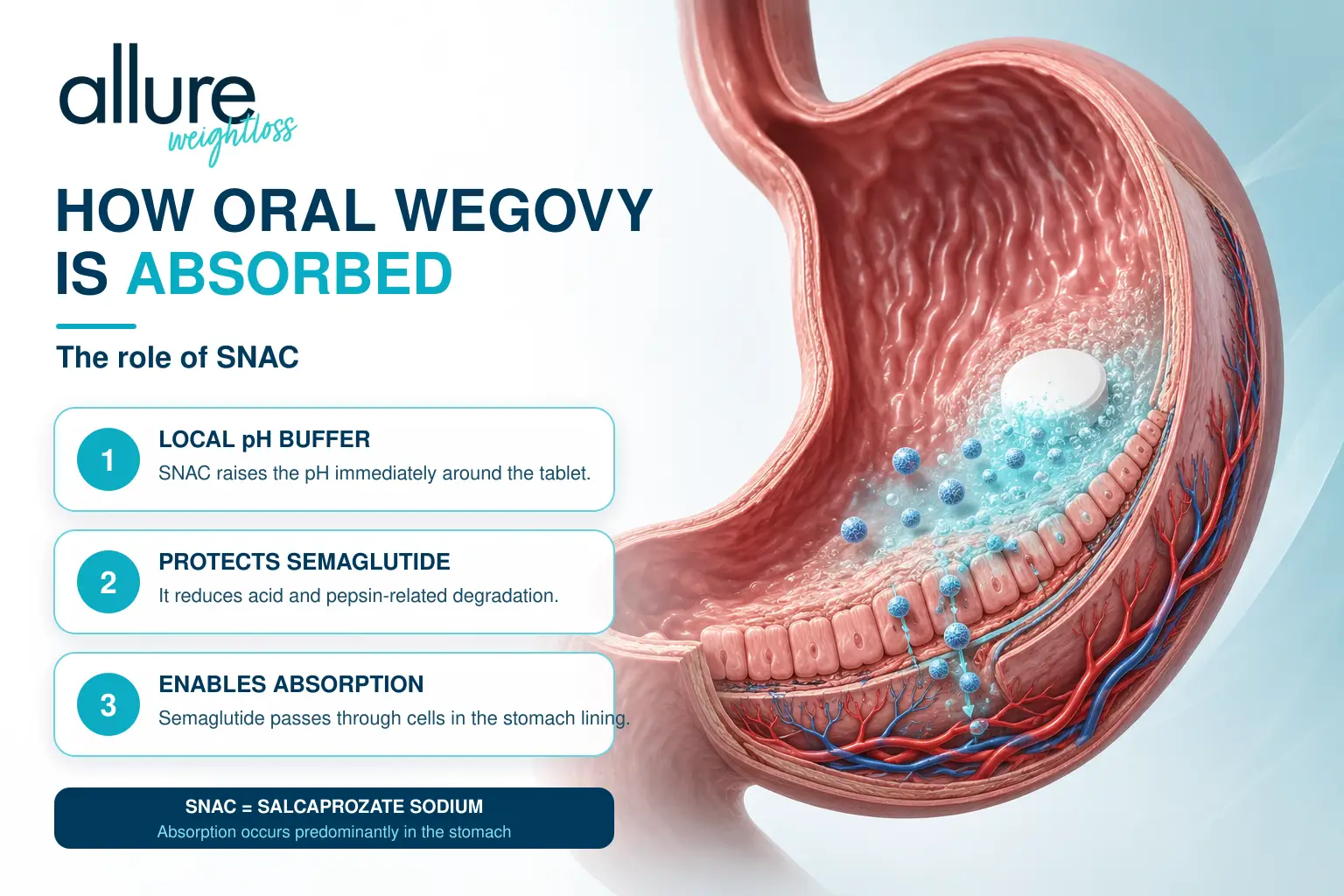
As the tablet dissolves against the stomach lining, SNAC creates a localised microenvironment around it. It helps oral semaglutide in several ways:
1. SNAC raises the local pH
SNAC temporarily raises the pH immediately around the dissolving tablet. This locally buffers the acidic stomach environment and helps protect semaglutide from acid-related damage and denaturation.
2. SNAC reduces enzymatic degradation
The altered local pH reduces the conversion of pepsinogen into pepsin and limits proteolytic degradation around the tablet. This gives semaglutide a better opportunity to remain intact long enough to be absorbed.
3. SNAC supports transcellular absorption
SNAC temporarily changes the properties of the gastric epithelial cell membrane, facilitating transcellular transport. This means semaglutide passes through cells in the stomach lining rather than simply travelling between them.
4. Absorption occurs predominantly in the stomach
This is unusual and important. Oral Wegovy is absorbed predominantly through the stomach, rather than behaving like a conventional tablet that is mainly absorbed later in the intestine.
The activity of SNAC is local and temporary. It does not permanently make the stomach “leaky” or permanently change its lining.
Why Is Oral Wegovy 25 mg When the Injection Is Only 2.4 mg?
The numbers can appear confusing, but milligrams cannot be compared directly between the two formulations.
Approximately 89% of subcutaneously injected semaglutide is bioavailable. By comparison, the estimated absolute bioavailability of semaglutide from the oral tablet is only around 1–2%.
The tablet therefore contains substantially more semaglutide to compensate for the small proportion that reaches the bloodstream.
At steady state, once-daily oral Wegovy 25 mg is predicted to produce an average semaglutide concentration broadly comparable to Wegovy 2.4 mg injected once weekly. However, oral absorption is more variable between patients.
Therefore, a 25 mg tablet is not “more than ten times stronger” than a 2.4 mg injection. They are different formulations with dramatically different absorption.
Why Oral Wegovy Must Be Taken Correctly
The SNAC absorption system also explains the strict administration instructions.
Oral Wegovy should generally be:
- taken once daily first thing in the morning;
- taken on an empty stomach;
- swallowed whole, without splitting, crushing or chewing;
- taken with plain water only, up to approximately 120 ml; and
- followed by a wait of at least 30 minutes before eating, drinking or taking other oral medication.
Food, other tablets and larger volumes of water can disrupt or dilute the local SNAC–semaglutide environment. This may reduce absorption and make exposure more variable.
This means a tablet may eliminate the needle, but it does not necessarily eliminate inconvenience. Some patients find a strict daily morning routine more difficult than one weekly injection.
Daily Tablet vs Weekly Injection
The practical differences matter because the most effective medication is one that the patient can take safely and consistently.
Oral treatment may appeal to patients who:
- dislike or fear needles;
- prefer taking tablets;
- travel frequently;
- would rather avoid injection devices; or
- can reliably follow a daily fasting routine.
Injectable treatment may appeal to patients who:
- prefer once-weekly administration;
- do not want medication tied to breakfast or other tablets;
- find it difficult to remember a daily dose;
- prefer the more predictable absorption of an injection; or
- are clinically better suited to a particular injectable medication.
Neither option is universally more convenient. It depends on the patient’s routine and preferences.
For more detail about the oral formulation, see our Wegovy Pill Dubai guide. Patients considering injections can also read Weight Loss Injections Dubai: What Patients Should Know.
Which Produces More Weight Loss?
Clinical trial averages can help patients understand the potential of different treatments, but they are not personal guarantees.
Oral Wegovy 25 mg — daily tablet
13.6% at 64 weeks
Analysis including all randomised participants.
16.6% at 64 weeks
Estimated result when participants remained on treatment as intended.
Injectable Wegovy 2.4 mg — weekly injection
14.9% at 68 weeks
Reported in a separate pivotal study—not a direct comparison with oral Wegovy.
Orforglipron 36 mg — daily tablet
Approximately 11–12% at 72 weeks
A different oral GLP-1 molecule rather than oral semaglutide.
Tirzepatide — weekly injection
20.2% at 72 weeks
A direct head-to-head result against injectable semaglutide.
The oral and injectable Wegovy results were obtained from different study populations and were not generated by directly randomising patients between the two formulations. It would therefore be misleading to claim that one is definitively equal or superior based only on these percentages.
Individual results vary according to factors including dose tolerance, adherence, biology, starting weight, nutrition, activity, sleep, medical conditions and the quality of ongoing support.
Read our detailed Orforglipron vs Mounjaro vs Wegovy UAE guide for a wider comparison.
Is Mounjaro Stronger Because It Is Injected?
No. Mounjaro’s weight loss results should not be attributed simply to the fact that it is an injection.
Wegovy contains semaglutide, a GLP-1 receptor agonist. Mounjaro contains tirzepatide, which activates both GIP and GLP-1 receptors.
Its dual mechanism is one reason tirzepatide can produce greater average weight loss than semaglutide in many patients. The difference is principally about the medication—not the needle.
Patients comparing these treatments may also wish to explore our medically supervised Wegovy Pill and Mounjaro programmes in Dubai.
Do Oral Weight Loss Medicines Have Fewer Side Effects?
Not automatically.
Common gastrointestinal side effects associated with GLP-1 treatment can include:
- nausea;
- vomiting;
- diarrhoea;
- constipation;
- abdominal discomfort;
- reflux or indigestion;
- bloating; and
- reduced appetite.
Many of these effects result from the biological action of the medication, including its effect on appetite and gastric emptying. Removing the needle does not remove the medication’s systemic effects.
Side effects are frequently most noticeable when treatment begins or after a dose increase. This is why appropriate dose escalation and clinical monitoring are important for oral and injectable treatment alike.
Severe vomiting is not evidence that a weight loss medication is “working well”. Treatment should aim to improve health—not make the patient unable to eat or drink.
Why Starting at the Correct Dose Matters
The 25 mg oral Wegovy tablet is the maintenance dose. It is not the recommended starting dose for someone new to semaglutide treatment.
The standard oral dose-escalation schedule is:
- Days 1–30: 1.5 mg once daily
- Days 31–60: 4 mg once daily
- Days 61–90: 9 mg once daily
- Day 91 onwards: 25 mg once daily
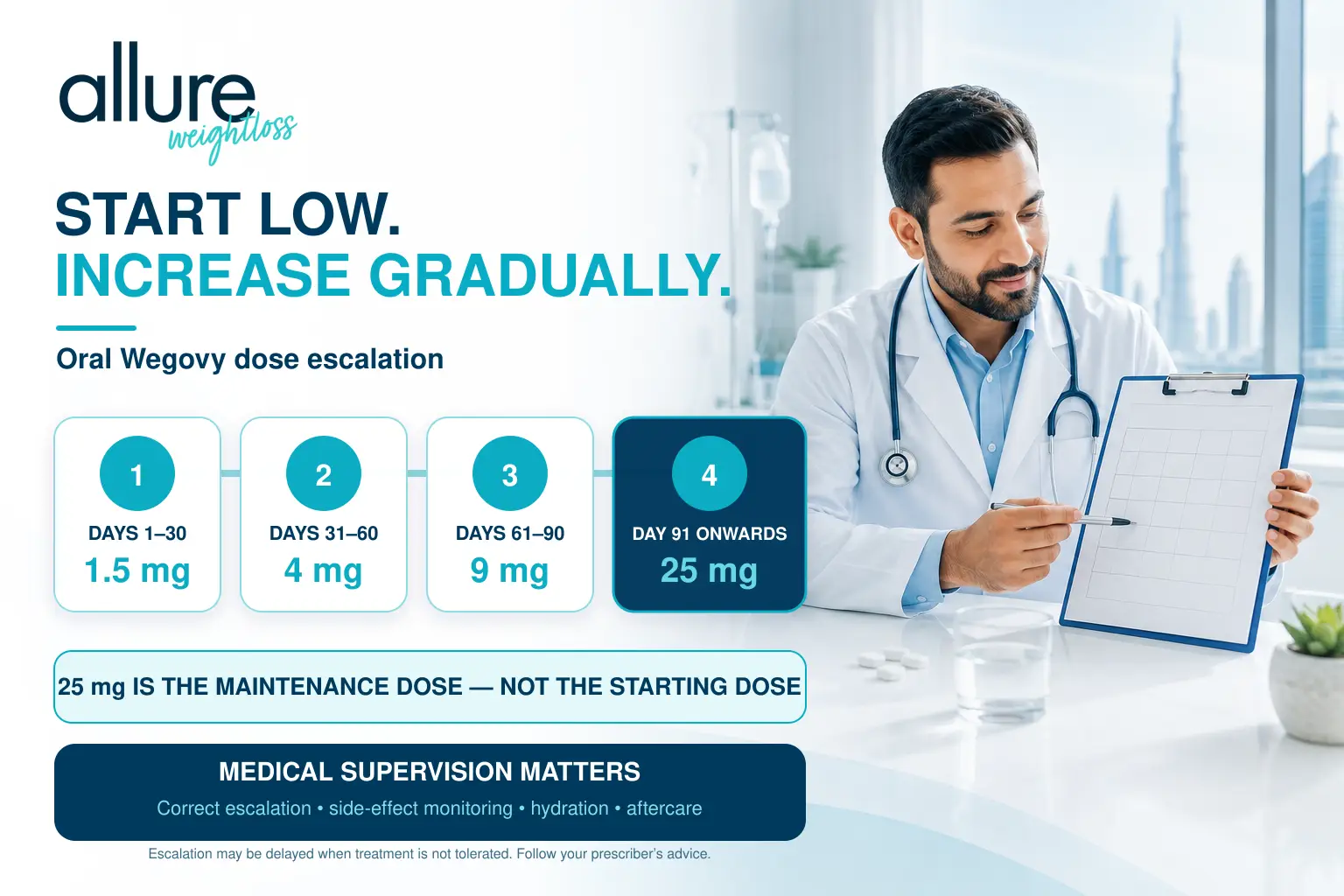
This staged escalation is designed to allow the body to adjust and reduce the risk of gastrointestinal adverse effects. Dose escalation may need to be delayed if a patient is not tolerating treatment.
Injectable Wegovy also begins at a low dose—normally 0.25 mg once weekly—before increasing gradually over several months.
A real-world reminder about unsupervised dosing
One patient who subsequently contacted Allure had obtained oral Wegovy independently and started immediately at the full 25 mg maintenance dose.
He developed continuous vomiting and required hospital treatment with intravenous fluids for two days.
This is an anonymised individual experience and does not mean everyone taking 25 mg will experience the same reaction. However, it demonstrates why patients should not bypass the recommended dose-escalation period or assume that a tablet is automatically mild.
Starting at 25 mg meant starting at the dose ordinarily reached only after approximately three months of escalation through 1.5 mg, 4 mg and 9 mg.
Why Medical Supervision and Aftercare Matter
Obtaining medication is only one part of safe and effective weight management.
A properly supervised programme should include:
- assessment of medical history and current medication;
- confirmation that the treatment is clinically appropriate;
- selection of the correct medicine and starting dose;
- gradual and individualised dose escalation;
- monitoring and management of side effects;
- advice on hydration, nutrition and protein intake;
- support to preserve muscle mass during weight loss;
- guidance during weight loss plateaus;
- clear instructions about delaying, reducing or withholding a dose;
- monitoring of treatment response;
- urgent escalation advice when symptoms require medical attention; and
- a long-term maintenance or discontinuation plan.
Medical supervision is not about increasing every patient to the highest possible dose as quickly as possible. The appropriate dose is the lowest dose that produces a useful clinical response while remaining tolerable and safe for that individual.
When Vomiting Requires Urgent Attention
Persistent vomiting can cause dehydration and electrolyte disturbance. Semaglutide prescribing information also warns about acute kidney injury associated with volume depletion, particularly when nausea, vomiting or diarrhoea prevents adequate fluid intake.
Patients should seek urgent clinical advice if they:
- cannot retain fluids;
- experience persistent or severe vomiting;
- develop dizziness, faintness or confusion;
- notice significantly reduced urination;
- experience severe or persistent abdominal pain;
- develop pain that radiates through to the back;
- vomit blood or material resembling coffee grounds; or
- experience facial swelling, breathing difficulty or another sign of a serious allergic reaction.
Severe and persistent abdominal pain can require urgent assessment for conditions including pancreatitis. Patients should not simply take their next dose and hope the symptoms disappear.
Which Is Better: Oral Medication or an Injection?
There is no single answer for every patient.
Oral Wegovy may offer substantial weight loss without injections, but it requires correct daily administration and has more variable absorption. Injectable Wegovy offers weekly dosing and more predictable delivery. Mounjaro may produce greater average weight loss for many suitable patients, but it is a different medication with its own dosing, contraindications and side-effect considerations.
The decision should consider:
- the amount of weight a patient needs to lose;
- BMI and weight-related health conditions;
- previous treatment history;
- diabetes and other metabolic conditions;
- current medication;
- contraindications and clinical risk factors;
- previous gastrointestinal side effects;
- needle preference;
- daily routine and likely adherence;
- availability and programme cost; and
- the level of medical and behavioural support required.
For some patients, the best treatment may be oral medication. For others, an injection will be more suitable. Some patients may need a different approach altogether, such as a gastric balloon, endoscopic treatment or bariatric surgery.
Our guide comparing weight loss injections, gastric balloons and bariatric surgery explains the wider treatment options.
Medically Supervised Weight Loss Medication in Dubai
Dubai patients now have access to a wider choice of oral and injectable weight loss medications than ever before. Greater availability is positive, but it also makes appropriate assessment, patient education and aftercare increasingly important.
Allure Weightloss does not simply arrange access to a box of medication. Our medically supervised programmes are designed around clinical assessment, appropriate prescribing, gradual dose management and ongoing support.
Depending on the programme, support may include medical oversight, dose reviews, nutrition and dietetic guidance, progress monitoring and help managing side effects or weight loss plateaus.
The objective is not simply to prescribe the strongest available medication. It is to identify the safest and most appropriate treatment pathway for the individual and help them use it correctly.
- Explore our Wegovy Pill programme
- Explore our Mounjaro programme
- Explore our injectable Wegovy programme
Frequently Asked Questions
Are oral weight loss medications weaker than injections?
Not necessarily. Oral semaglutide has produced substantial average weight loss in clinical trials, approaching results historically reported with injectable Wegovy. However, different medicines and separate trials cannot be compared solely according to whether the treatment is oral or injected.
Does oral Wegovy work as well as injectable Wegovy?
Trial results suggest oral Wegovy can approach the weight loss achieved with injectable Wegovy. However, there has not been a definitive head-to-head weight management trial directly comparing the two formulations, so exact superiority or equivalence should not be claimed.
Why is Wegovy Pill 25 mg but the injection only 2.4 mg?
Only around 1–2% of oral semaglutide is absorbed, compared with approximately 89% following subcutaneous injection. The tablet therefore contains a larger amount to compensate. The labelled milligram doses cannot be compared directly.
What is SNAC in oral Wegovy?
SNAC is salcaprozate sodium, an absorption enhancer co-formulated with semaglutide. It creates a temporary local environment in the stomach that protects semaglutide from degradation and helps it pass through cells in the stomach lining.
Can I start oral Wegovy at 25 mg?
Patients who are new to treatment would not ordinarily start at 25 mg. The standard schedule begins at 1.5 mg daily and increases gradually through 4 mg and 9 mg before reaching the 25 mg maintenance dose. A prescriber should determine the appropriate schedule for the individual.
Is a weight loss pill safer than an injection?
Not automatically. Oral and injectable GLP-1 treatments can both cause gastrointestinal and other adverse effects. Safety depends on the medication, patient, dose, escalation and medical monitoring—not simply the route of administration.
Does vomiting mean the medication is working?
No. Persistent or severe vomiting is an adverse effect, not a treatment objective. It can cause dehydration and may require urgent medical assessment.
Dubai’s Dedicated Medical Weight Loss Company
Allure Weightloss is built exclusively around medical weight management. It is not one small service within a general clinic—it is all we do.
That specialist focus means patients are not restricted to whichever single treatment a particular clinic happens to offer. Our role is to help each patient understand the full range of medically appropriate options and identify the pathway that best fits their health, weight loss needs and personal circumstances.
Through our network of experienced doctors, surgeons and licensed hospital partners, Allure provides access to the complete medical weight loss pathway in Dubai:
- Oral weight loss medication in Dubai, including medically supervised Wegovy Pill programmes;
- Weight loss injections in Dubai, including Mounjaro and injectable Wegovy programmes;
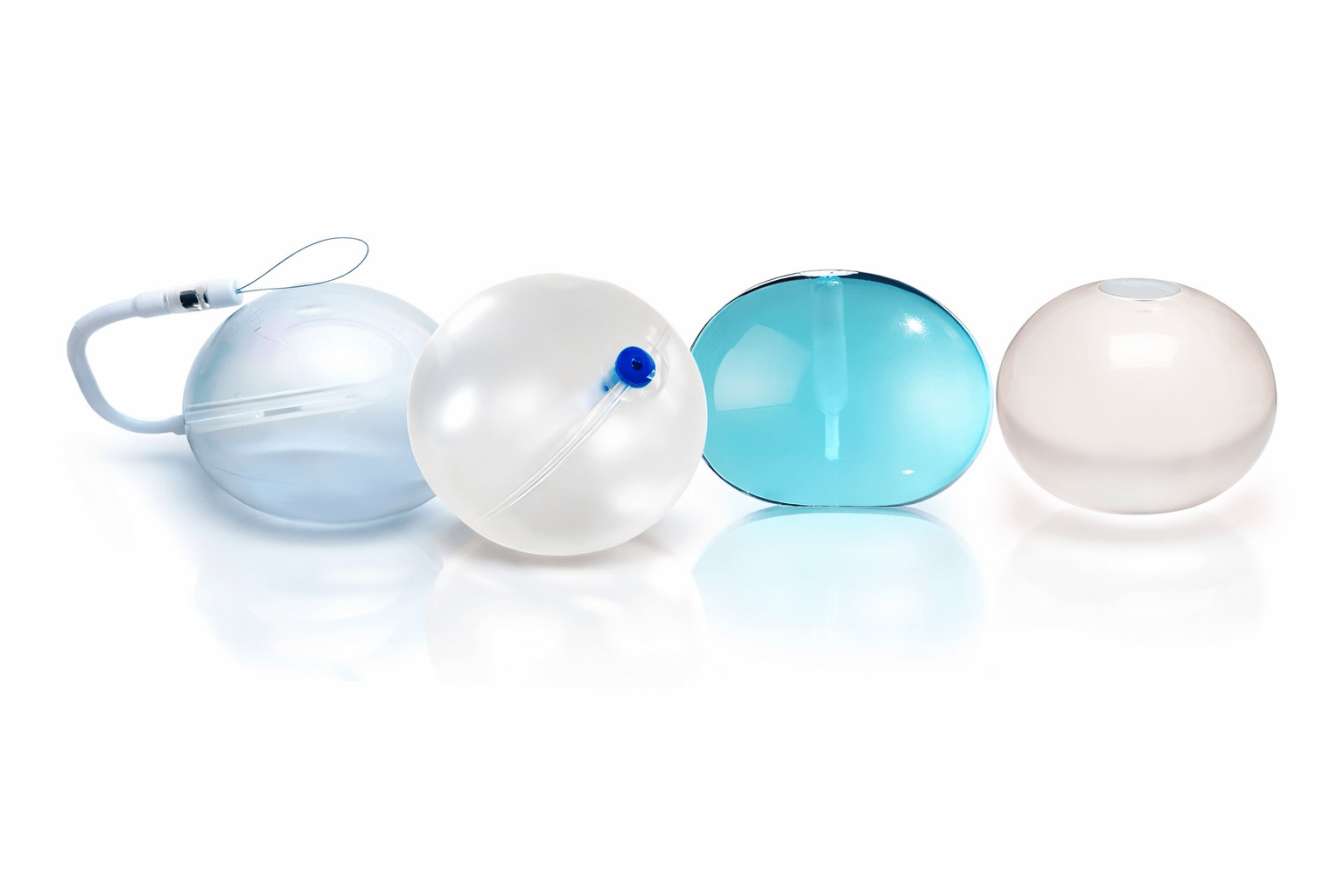
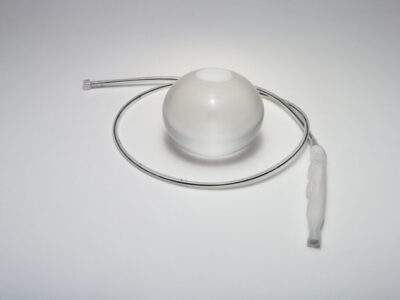
- Gastric balloon treatment in Dubai, including swallowable and endoscopically placed balloon options;
- Endoscopic weight loss procedures, including Endoscopic Sleeve Gastroplasty (ESG) and POSE 2.0;
- Gastric sleeve surgery in Dubai;
- Gastric bypass and mini gastric bypass in Dubai;
- Revision bariatric surgery for appropriate patients who have previously undergone weight loss surgery; and
- Specialist aftercare, including medical monitoring, nutritional guidance, dietetic support and long-term weight management.
This breadth matters because there is no single “best” treatment for every patient. Someone looking for a weight loss pill may ultimately be better suited to an injection. Another patient may achieve a more appropriate result with a gastric balloon, while someone living with more severe obesity may benefit from a gastric sleeve or bypass assessment.
Allure’s purpose is not to push every patient towards the same product. It is to provide informed, medically responsible guidance across the full spectrum of weight loss treatments available in Dubai.
- Gastric Balloon Dubai: Cost, Options & What to Expect
- Weight Loss Surgery in Dubai: Sleeve, Bypass and Revision Surgery
- Allure Weightloss aftercare and support
Speak to Allure Weightloss
If you are considering oral Wegovy, Mounjaro, injectable Wegovy or another medical weight loss treatment in Dubai, Allure can help you understand the differences and assess which pathway may be appropriate for you.
Contact our patient care team to arrange an initial suitability assessment and discuss the full range of medical weight loss treatments available in Dubai.
Clinical Sources
- Wegovy prescribing information: oral and injectable semaglutide
- OASIS 4: oral semaglutide 25 mg in adults with overweight or obesity
- Mechanistic study of SNAC-enabled gastric absorption
- SURMOUNT-5: tirzepatide compared with semaglutide
Prescription weight loss medications are not suitable for everyone. Treatment should only be started following appropriate clinical assessment and prescribing. Individual results vary. The information in this article is educational and does not replace personalised medical advice.