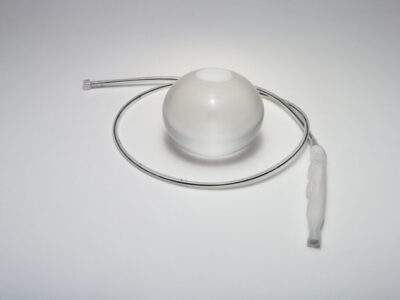
Many people begin Mounjaro or Wegovy with a clear starting plan but no clear stopping plan.
They may know which dose comes next and how much weight they hope to lose, yet still be unsure about the longer-term questions:
- What happens when the injections stop?
- Will hunger and “food noise” return?
- Does everyone regain weight?
- Should the medication be reduced gradually?
- Is a lower maintenance dose possible?
- What support is available in Dubai after treatment?
The short answer is that weight regain after stopping Mounjaro or Wegovy is common, but it is not identical for everyone. These medications suppress appetite and change biological signals involved in food intake while they are active. As their effect fades, hunger may increase and the body may begin defending its previous weight.
This is not evidence that the patient has failed. It is one reason obesity is increasingly treated as a chronic, relapsing medical condition rather than a short-term test of willpower.
A safe long-term plan may involve continuing treatment, reviewing the dose, changing medication, transitioning to another medically appropriate option or stopping with structured monitoring and aftercare. That decision should be individualised with a qualified prescriber.
The most important point: Do not wait until the final injection to think about maintenance. The best time to plan what happens after Mounjaro or Wegovy is before treatment is reduced, changed or stopped.
Is It Safe to Stop Mounjaro or Wegovy?
Mounjaro and Wegovy are not dependence-forming medicines, and most patients do not experience a classic withdrawal syndrome of the kind associated with addictive drugs.
However, that does not mean stopping is clinically insignificant.
When the medication is withdrawn:
- appetite suppression may reduce;
- hunger and cravings may become more noticeable;
- “food noise” may return;
- portion sizes may gradually increase;
- blood glucose control can worsen in people using treatment for diabetes;
- weight may begin to rise; and
- some improvements in blood pressure, glucose and cholesterol may diminish as weight returns.
Patients should therefore speak to their prescriber before changing or stopping treatment—particularly if they have type 2 diabetes, take other glucose-lowering medication, are experiencing significant side effects, or are planning pregnancy.
Stopping because of severe symptoms is a different situation from planned discontinuation after successful treatment. Severe or persistent abdominal pain, repeated vomiting, dehydration, allergic symptoms or another urgent clinical concern requires prompt medical advice rather than an online tapering plan.
Do You Need to Taper Off Mounjaro or Wegovy?
There is currently no single, universally validated tapering schedule that applies to every patient stopping semaglutide or tirzepatide.
The official product information does not provide one standard step-down programme for routine discontinuation. In practice, a clinician may sometimes reduce a dose gradually, extend treatment, use a tolerated maintenance dose or recommend stopping directly, depending on the reason for the change and the patient’s medical circumstances.
Those approaches are not interchangeable, and patients should not create their own schedule by stretching the interval between injections or using leftover doses without clinical guidance.
A stopping review should consider:
- why treatment is being stopped;
- current dose and duration of treatment;
- weight lost and whether weight is still changing;
- appetite and food-noise control;
- side effects and dose tolerance;
- diabetes or other metabolic conditions;
- other medication;
- nutrition, muscle strength and activity;
- pregnancy plans where relevant;
- cost or medication availability; and
- the patient’s realistic long-term treatment preferences.
The right question is not simply, “Should I taper?” It is, “What is the safest and most sustainable maintenance plan for me?”
How Long Do Mounjaro and Wegovy Remain in the Body?
Both medicines continue acting after the final injection because they are designed for once-weekly dosing.
Semaglutide, the active ingredient in Wegovy, has a half-life of approximately one week. Tirzepatide, the active ingredient in Mounjaro, has a half-life of approximately five days. These figures come from the manufacturers’ current Wegovy prescribing information and Mounjaro prescribing information.
This means their effects usually fade over several weeks rather than disappearing the morning after a missed dose. Patients may notice appetite changes gradually, and the timing varies between individuals.
The long half-life is also why planned pregnancy requires specific medical advice. Semaglutide product information advises discontinuing treatment at least two months before a planned pregnancy. Patients taking tirzepatide should also discuss the appropriate interval with their prescriber rather than relying on general online advice.
Why Can Hunger Return After Stopping a GLP-1 Medicine?
Mounjaro and Wegovy influence the biological systems involved in appetite and food intake.
Wegovy contains semaglutide, which activates the GLP-1 receptor. Mounjaro contains tirzepatide, which activates both GIP and GLP-1 receptors. While treatment is active, these medicines can:
- reduce hunger;
- increase fullness after eating;
- reduce cravings and food preoccupation;
- slow gastric emptying; and
- make a calorie deficit easier to sustain.
When treatment stops, those medication-driven effects gradually reduce. The body may also respond to weight loss by increasing hunger signals and reducing energy expenditure—a biological defence against remaining at a lower weight.
Patients sometimes interpret the return of appetite as a lack of discipline. A more accurate explanation is that the biological environment has changed again.
Lifestyle habits remain important, but they are not always powerful enough to reproduce the appetite suppression provided by medication. This is why a person may follow a healthy diet and still find maintenance substantially harder after stopping.
Patients comparing different medication formats can read our guide to oral weight loss medications versus injections in Dubai.
Will Everyone Regain Weight After Stopping Mounjaro or Wegovy?
No. It would be inaccurate to say that every patient will regain all the weight they lost.
Clinical studies show averages across groups. Individual experiences vary. Some people regain rapidly, some regain gradually, some maintain a meaningful proportion of their loss, and a smaller group may remain relatively stable.
The likelihood and amount of regain may be influenced by:
- the amount of weight initially lost;
- duration of treatment;
- underlying biology and health conditions;
- eating patterns developed during treatment;
- protein and fibre intake;
- muscle mass and physical activity;
- sleep, stress and alcohol intake;
- the reason treatment stopped;
- whether another treatment was introduced; and
- the quality of monitoring and aftercare.
The evidence nevertheless shows that substantial regain is common enough that every patient should have a maintenance plan.
What Does the Research Show About Weight Regain?
Semaglutide: the STEP 1 extension
Participants in the original STEP 1 trial received semaglutide 2.4 mg or placebo alongside lifestyle intervention for 68 weeks. The STEP 1 trial extension followed participants for one year after treatment and lifestyle support were withdrawn.
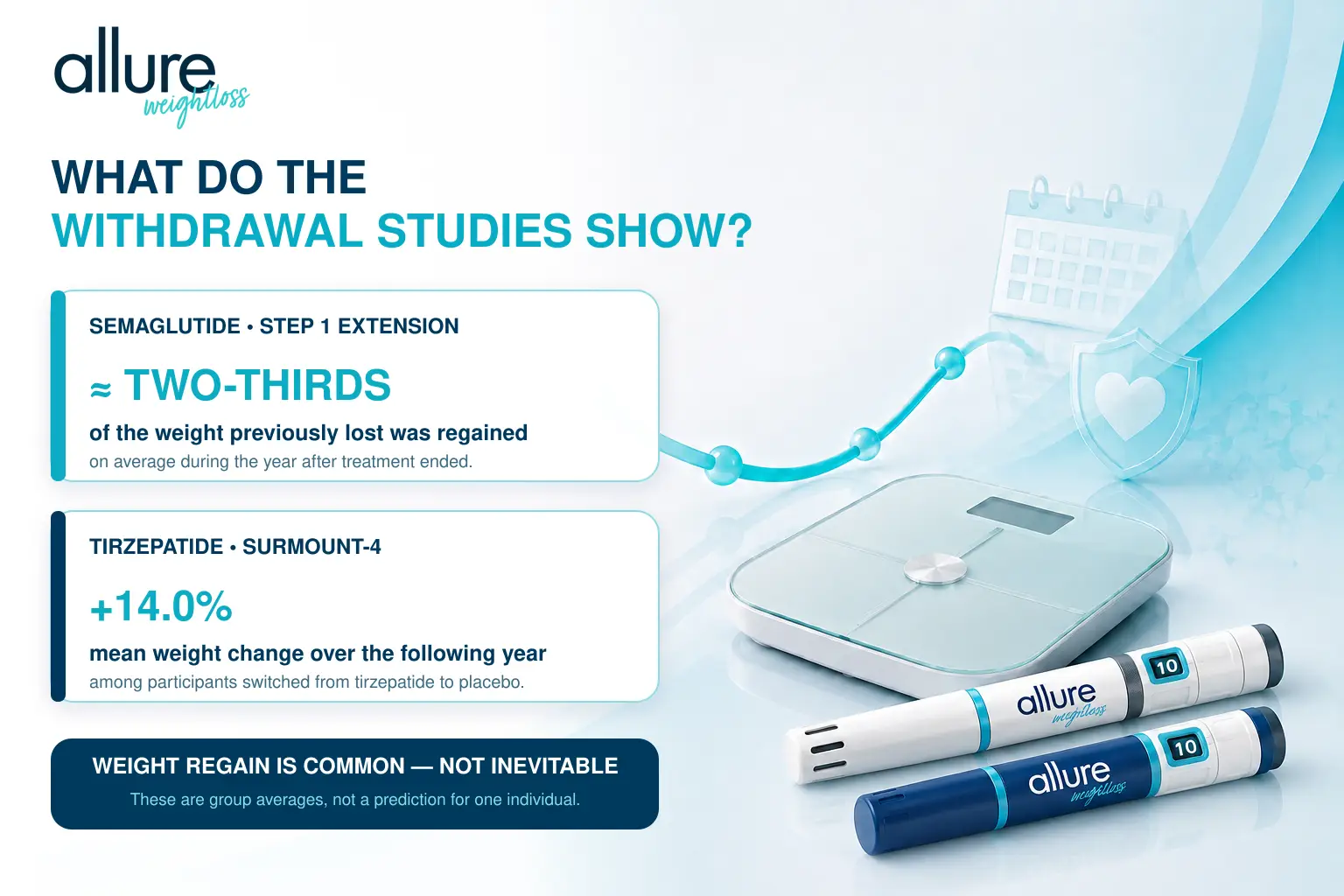
During that year, participants previously treated with semaglutide regained an average of 11.6 percentage points of body weight—approximately two-thirds of their earlier weight loss. They still remained, on average, 5.6% below their starting weight at the end of the extension.
This distinction matters. The study showed substantial regain, but not that every participant returned fully to their baseline weight.
Tirzepatide: the SURMOUNT-4 withdrawal trial
In the SURMOUNT-4 withdrawal trial, participants first received tirzepatide for 36 weeks and achieved an average weight reduction of 20.9%. They were then randomised either to continue tirzepatide or switch to placebo for another 52 weeks, while both groups continued lifestyle intervention.
From week 36 to week 88:
- those continuing tirzepatide lost a further 5.5% on average;
- those switched to placebo gained 14.0% on average; and
- 89.5% of those continuing tirzepatide maintained at least 80% of their initial weight loss, compared with 16.6% of those switched to placebo.
The withdrawal group still finished the full study an average of 9.9% below baseline. Again, the accurate message is substantial regain—not automatic return to the exact starting weight for every participant.
The 2026 BMJ systematic review
A 2026 BMJ systematic review and meta-analysis brought together evidence on weight regain after stopping different weight-management medicines. Across the included studies, weight increased at an average rate of approximately 0.4 kg per month after cessation, with cardiometabolic benefits also tending to reverse.
The review covered different medications, treatment durations and populations, so 0.4 kg per month should not be treated as a personal forecast. It reinforces the broader point: stopping medication without a maintenance strategy creates a predictable period of increased risk.
Weight Regain Is Not the Same as Personal Failure
The language used around regain matters.
A patient who loses weight on medication and regains some after stopping has not “wasted” the treatment. During weight loss, they may have improved mobility, blood pressure, glucose control, sleep, confidence and quality of life. The appropriate response to regain is not shame; it is reassessment.
Obesity is influenced by appetite hormones, genetics, metabolic adaptation, environment, sleep, medication and psychological factors. Successful long-term care often requires more than a single time-limited intervention.
This is comparable to other chronic conditions. When blood pressure rises after antihypertensive treatment stops, we do not conclude that the patient failed. We recognise that the treatment was controlling an ongoing biological problem.
Why Medical Aftercare Matters in Dubai
Dubai patients can often access weight loss medication quickly. The more important question is what clinical support surrounds it.
Buying repeated boxes from different pharmacies can leave major gaps:
- no consistent prescriber overseeing the full journey;
- no agreed goal or maintenance strategy;
- doses increased or stopped according to availability rather than clinical need;
- side effects managed reactively;
- inadequate attention to protein and muscle preservation;
- no plan for plateaus; and
- no early response when appetite or weight starts returning.
A medically supervised weight loss programme in Dubai should include both an entry plan and an exit or maintenance plan.
Allure’s approach is not based on increasing every patient to the highest dose and then ending treatment when the package finishes. Reviews should consider response, tolerability, health, nutrition and what the patient can realistically sustain.
Patients currently considering treatment can also read our 2026 guide to weight loss injections in Dubai.
Building a Maintenance Plan Before You Stop
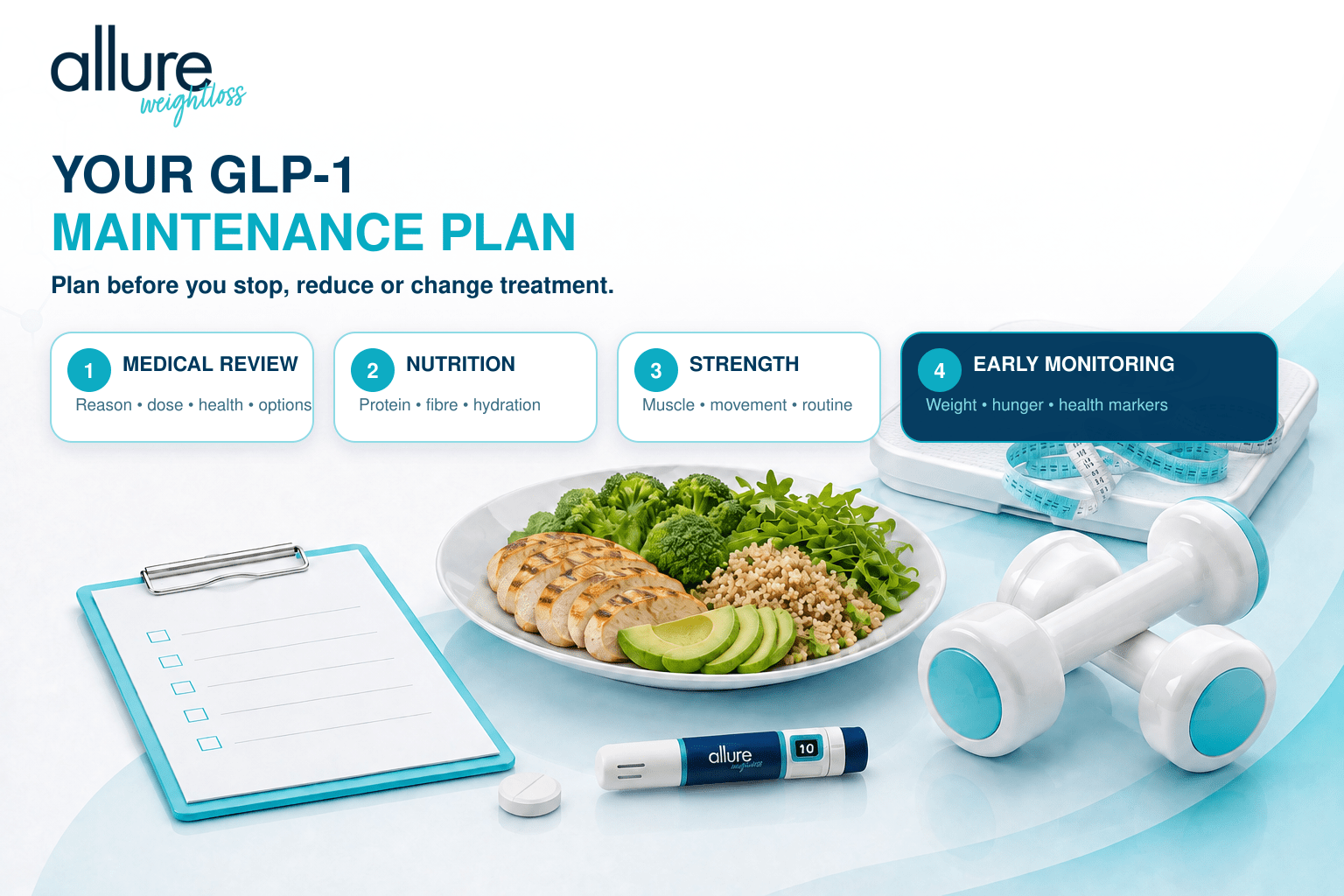
A maintenance plan should be personalised, but there are several areas that every patient should address.
1. Review why treatment is changing
Stopping because the initial goal has been reached is different from stopping because of persistent vomiting, lack of response, medication shortages, cost or planned pregnancy.
The reason affects the safest next step. A patient experiencing poor tolerability may need urgent clinical review or a different treatment. Someone who has reached a stable weight may need a longer-term maintenance discussion. Someone stopping because of cost needs an honest plan that does not depend on an unaffordable recommendation.
2. Review medication options with a prescriber
Depending on clinical suitability, the discussion might include:
- continuing the current medicine;
- remaining on an appropriate tolerated maintenance dose;
- changing the dose;
- switching between injectable treatments;
- considering an oral weight loss medication;
- stopping with structured monitoring; or
- considering a non-medication treatment pathway.
These are clinical possibilities, not a menu for self-selection. Switching from Mounjaro to Wegovy—or from an injection to the Wegovy pill—requires a new prescribing decision and clear instructions about timing and dose.
Patients who prefer a tablet can explore our medically supervised Wegovy Pill programme in Dubai. Those considering injectable treatment can read about our Mounjaro weight loss programme in Dubai and Wegovy injection programme.
3. Protect protein intake and muscle mass
Weight loss can include both fat mass and lean mass. Preserving muscle supports strength, function and long-term energy expenditure.
A maintenance plan should therefore consider:
- adequate daily protein distributed across meals;
- resistance or strength-based exercise appropriate to the individual;
- regular movement and cardiovascular activity;
- hydration;
- micronutrient quality; and
- dietetic support when intake has been limited or nutritional adequacy is uncertain.
The goal is not an extreme high-protein diet or an aggressive exercise programme. It is a sustainable routine that protects health while appetite and intake change.
4. Plan for the return of hunger
Patients should not be surprised if hunger feels different after treatment.
Useful preparation may include:
- regular meal structure;
- protein and fibre at meals;
- identifying high-risk times for snacking;
- reducing reliance on highly energy-dense convenience foods;
- planning meals around work, travel and social events;
- managing sleep and stress; and
- distinguishing physical hunger from habitual or emotional eating.
These strategies may not recreate the full pharmacological effect of Mounjaro or Wegovy, but they can improve control and help identify problems early.
5. Monitor trends without becoming obsessive
Avoiding the scales for months can allow a small, manageable change to become a larger regain before support is sought.
Monitoring might include:
- weight at a consistent interval;
- waist measurement;
- hunger and food-noise changes;
- portion sizes;
- strength and activity;
- blood pressure;
- glucose or HbA1c where clinically relevant; and
- other markers recommended by the treating clinician.
The purpose is not daily judgement. It is early information.
6. Agree when to seek help
Patients should know in advance what will trigger a review. That might be a consistent upward weight trend, a marked return of cravings, deterioration in blood glucose, loss of eating control or difficulty maintaining nutrition and activity.
There is no need to wait until all the weight has returned.
What If You Cannot or Do Not Want to Stay on Medication Long Term?
Long-term medication may be appropriate for many patients, but it is not the only medical weight-loss pathway available in Dubai.
Some people cannot tolerate treatment. Others do not want indefinite medication, struggle with ongoing cost, experience inadequate results or need a more durable intervention for the severity of their obesity.
Depending on BMI, health, previous treatment and personal preferences, alternatives may include:
- a swallowable gastric balloon;
- a six- or twelve-month endoscopic gastric balloon;
- Endoscopic Sleeve Gastroplasty (ESG);
- POSE 2.0;
- gastric sleeve surgery;
- gastric bypass or mini gastric bypass; or
- revision bariatric surgery for appropriate patients.
A gastric balloon or procedure should not be presented as a simple replacement for a medication without assessment. It is a different treatment with different eligibility, benefits, risks and aftercare requirements.
Patients can read our current guides to gastric balloon treatment and cost in Dubai and weight loss surgery in Dubai.
Can You Switch From Mounjaro to Wegovy or the Wegovy Pill?
Potentially, but the change should be prescribed and timed by a clinician.
Mounjaro contains tirzepatide. Wegovy contains semaglutide. They are different medicines with different mechanisms, dose schedules and tolerability considerations. Milligrams cannot be converted directly.
The new oral Wegovy formulation may appeal to patients who want to avoid injections, but it also requires strict daily administration on an empty stomach. Changing route does not remove the need for dose management or side-effect monitoring.
Our detailed comparison of oral weight loss medication versus injections explains the practical and clinical differences.
Frequently Asked Questions
What happens when you stop Mounjaro?
As tirzepatide clears from the body, appetite suppression may reduce and hunger or food noise may return. Weight regain is common in clinical trials, although the amount varies. People using Mounjaro for diabetes may also experience worsening glucose control and should not stop without medical advice.
What happens when you stop Wegovy?
The appetite-regulating effect of semaglutide gradually fades over several weeks. Some people notice increased hunger, cravings and larger portions. In the STEP 1 extension, participants regained approximately two-thirds of their earlier weight loss on average during the following year, although they remained below baseline as a group.
Will I regain all the weight after stopping Mounjaro or Wegovy?
Not necessarily. Studies demonstrate substantial average regain, but individual results vary. Some patients maintain part of their loss, particularly with structured monitoring, nutrition, physical activity and appropriate ongoing treatment. No responsible provider should guarantee that weight regain can be completely prevented.
Can I stop Mounjaro or Wegovy suddenly?
There is no standard withdrawal taper required for every patient, but that does not make unsupervised stopping advisable. The decision depends on why treatment is ending, medical history, diabetes status, side effects and the maintenance plan. Speak to the prescriber before changing treatment.
Is there a standard Mounjaro or Wegovy tapering schedule?
No universally validated tapering schedule applies to everyone. Clinicians may individualise the dose or stopping approach, but patients should not invent their own schedule or stretch injection intervals without advice.
Can I use a lower maintenance dose?
Some patients remain on an appropriate tolerated dose under clinical supervision. Whether that is suitable depends on the medicine, approved dosing, response, side effects and individual health. A lower dose should not be assumed to provide the same appetite or weight control for everyone.
How quickly does weight return after stopping?
There is no fixed timeline. Appetite changes may become noticeable as the medicine clears over several weeks, while weight trends develop over months. A 2026 systematic review across weight-management medicines found average regain of approximately 0.4 kg per month after cessation, but individual rates varied considerably.
Can I switch from Mounjaro to oral Wegovy in Dubai?
It may be possible for a clinically suitable patient, but it requires a prescriber-led transition. Oral Wegovy has a separate dose-escalation schedule and strict administration instructions. Patients should not substitute one medicine for another independently.
Where can I get Mounjaro or Wegovy aftercare in Dubai?
Look for a medically supervised programme that provides clinical assessment, dose review, side-effect support, nutrition guidance, progress monitoring and a long-term maintenance plan—not medication supply alone.
Dubai’s Dedicated Medical Weight-Loss Company
Allure Weightloss is built exclusively around medical weight management. Medical weight loss is not a small department within a general clinic—it is all we do.
That specialist focus allows us to consider the full pathway rather than directing every patient towards one product or procedure. Through experienced clinicians and licensed hospital partners, Allure supports access to:
- oral weight loss medication in Dubai;
- Mounjaro and Wegovy injections in Dubai;
- medication continuation and maintenance support;
- swallowable and endoscopic gastric balloons in Dubai;
- ESG and POSE 2.0 endoscopic procedures;
- gastric sleeve surgery in Dubai;
- gastric bypass and mini gastric bypass;
- revision bariatric surgery; and
- specialist nutritional and long-term aftercare.
The best next step after Mounjaro or Wegovy is not automatically another prescription. It is an informed review of the patient’s health, weight history, treatment response and sustainable options.
Speak to Allure Weightloss in Dubai
If you are taking Mounjaro or Wegovy in Dubai—or considering stopping, changing or restarting treatment—Allure can help you build a medically supervised plan.
Our patient care team can explain medication, maintenance and wider medical weight-loss options and arrange the appropriate next stage of assessment.
Contact Allure before your final dose, rather than waiting for weight regain to become established.
Prescription weight loss medication is not suitable for everyone. Do not start, stop, reduce or switch treatment without appropriate clinical advice. Individual results vary. This article is educational and does not replace personalised medical assessment.